Best Enrichment Toys for Indoor Cats
What are some good enrichment toys for indoor cats?
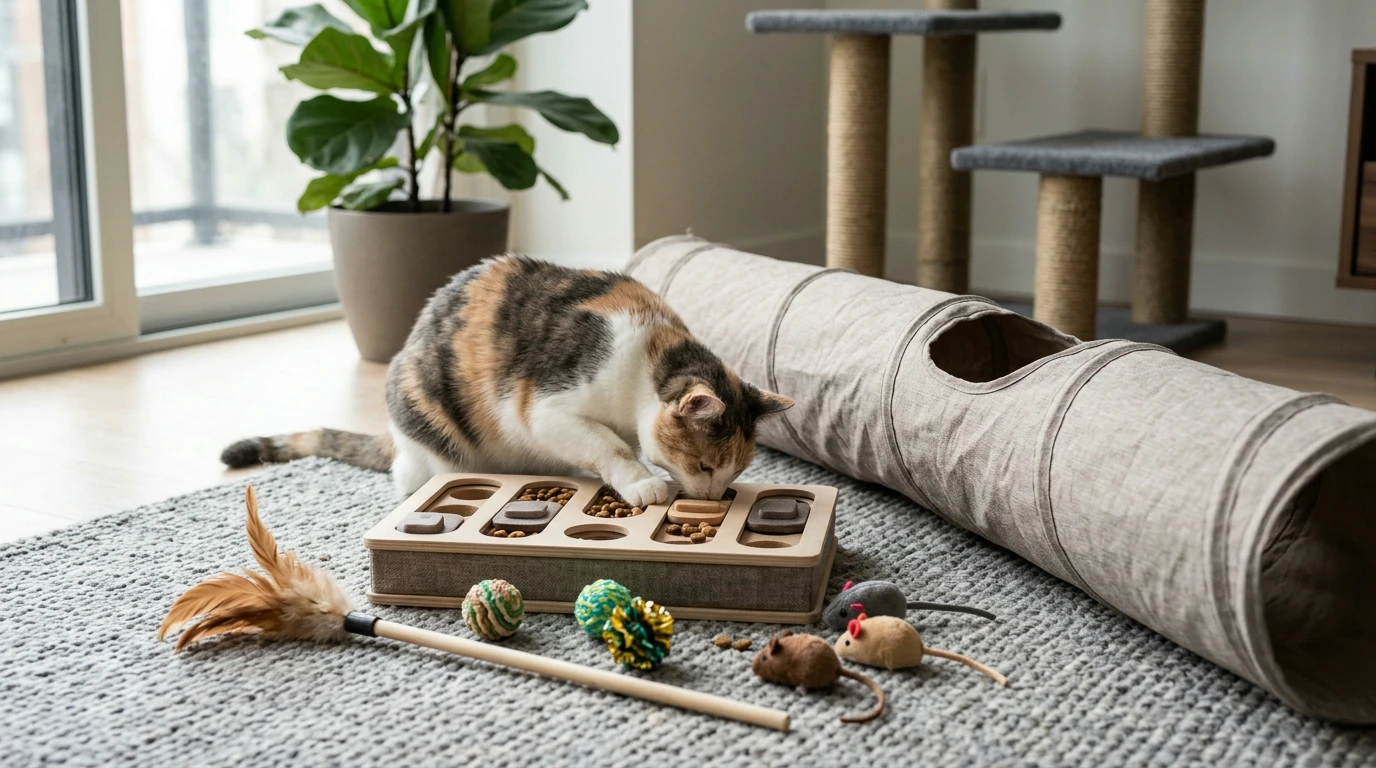
Good enrichment toys give your indoor cat opportunities to stalk, chase, pounce, and solve small problems. Our team recommends offering a mix of interactive playthings and independent activities, then rotating them to keep play fresh.
Which toys encourage hunting-style play?
Wand toys with feathers, fabric strips, or soft prey-shaped attachments let you imitate the movement of a bird or mouse. Move the toy away from your cat, pause behind furniture, and let your cat catch it occasionally. Put wand toys and loose strings away after supervised play so they cannot be swallowed or tangled around your cat.
Small plush mice and lightweight balls are easy to bat, chase, and carry. Choose sturdy toys that are too large to swallow, with no easily detached eyes, bells, or other small parts. A soft kicker toy can also give your cat something to grab and wrestle with their back feet.
What toys keep cats busy between play sessions?
Puzzle feeders and treat balls turn part of a meal into a rewarding challenge. Start with an easy opening and a few pieces of your cat’s usual food, then increase the difficulty as your cat learns. Count treats and puzzle-feeder food as part of your cat’s daily intake.
Track toys with enclosed balls offer batting practice without sending a ball under the sofa. You can also hide a few toys around the room for your cat to discover. Inspect toys regularly and remove any that are broken, frayed, or coming apart.
Can simple household items be enriching?
Yes. A cardboard box can become a hideout, a tunnel entrance, or a place to scatter a few toys. Paper bags can be fun too, but remove the handles first to prevent entanglement. Skip plastic bags and avoid leaving your cat with loose ribbon, rubber bands, or small objects they could swallow.
Our guide to indoor cat enrichment has more ideas for DIY toys, play, and home upgrades.
FAQ
How often should you play with an indoor cat?
Try a few short play sessions each day, adjusting their length to your cat’s age, energy, and interest. Stop when your cat seems tired or disengaged, and let them finish with a satisfying catch.











Leave a comment