New Puppy Training: A Gentle Four-Week Starter Guide
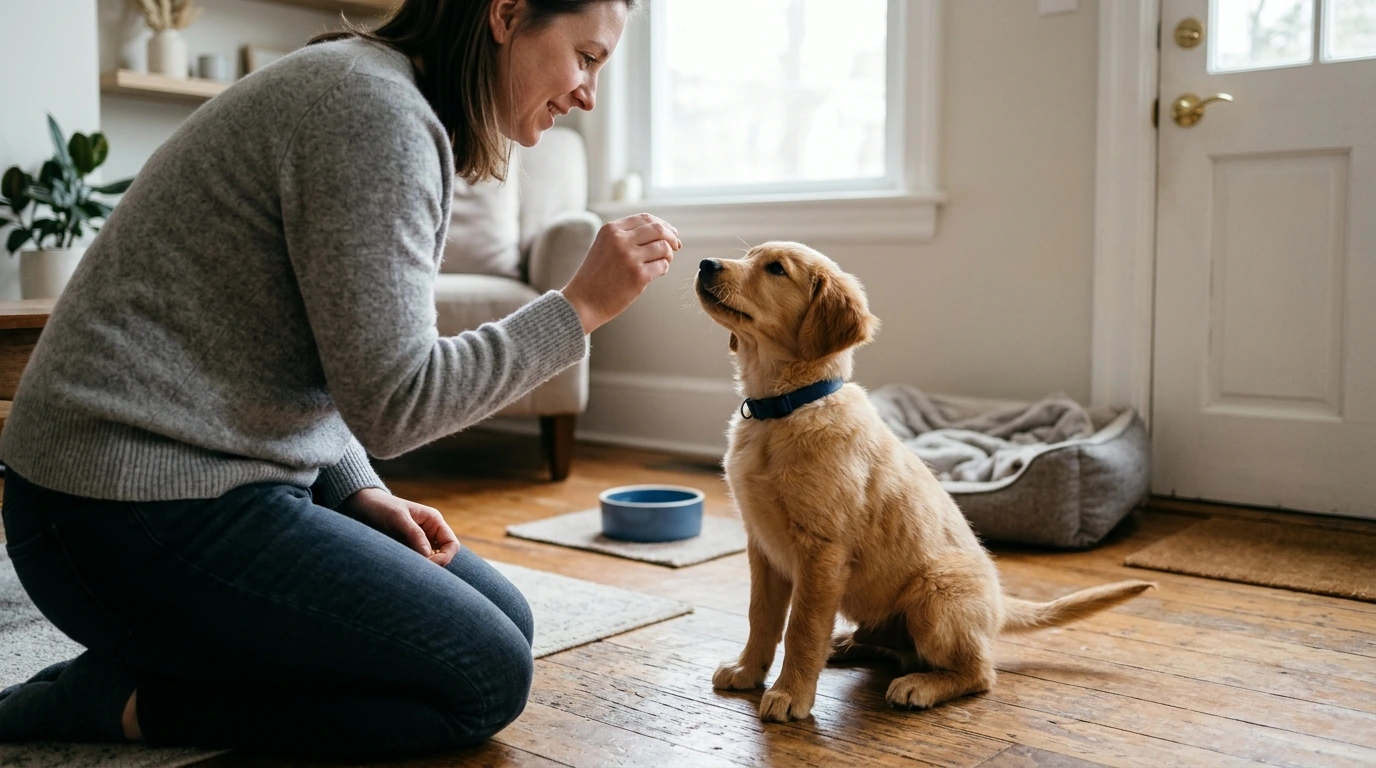
A new puppy brings plenty of excitement, along with a lot of small decisions about meals, bathroom breaks, play, and training. A predictable routine can make those first days feel more manageable for both of you. Our New Puppy Training Starter Guide brings beginner topics together in a printable four-week format, so you can keep your early training plans close at hand.
Start With a Predictable Routine
Start by giving your puppy regular opportunities to eat, rest, play, and go to the bathroom. A familiar rhythm helps you anticipate their needs and gives you more chances to reward the behaviors you want to see. You do not need a perfect schedule; aim for consistency while making room for your puppy’s age and individual needs.
Choose a bathroom spot that is easy to reach, and plan breaks around the times your puppy is most likely to need one. Keep meals consistent, too, and leave space for quiet time between activities. When your puppy is awake and ready to engage, use a few moments for a simple training exercise.
Our printable beginner eBook covers a four-week puppy routine, house-training, basic commands, and socialization. Pair it with a flexible mindset: a young puppy may need more bathroom trips and shorter practice sessions than an older puppy. If an exercise feels difficult, make it easier and try again later.
A Four-Week Framework for Getting Started
The framework below is one gentle way to approach your first month together, rather than a description of the guide’s exact chapter layout. Each week adds a focus, but you can return to earlier skills whenever your puppy needs more practice.
| Week | Focus | Simple practice |
|---|---|---|
| 1 | Settling in and house-training | Establish bathroom opportunities and reward outdoor success. |
| 2 | Attention and basic cues | Practice responding to a name and introduce a simple cue such as sit. |
| 3 | Comfort with new experiences | Introduce suitable people, sounds, and surroundings at the puppy’s pace. |
| 4 | Building consistency | Repeat familiar skills in slightly different settings with gentle rewards. |
Think of the weeks as overlapping rather than separate stages. House-training continues while you introduce a cue, and positive exposure to new experiences can begin early. If your puppy is distracted in a new setting, return to a quieter place or practice a familiar skill before trying again.
Make House-Training Easier
Offer frequent bathroom opportunities, especially after your puppy wakes up, eats, or plays. Take them to the chosen spot and give them time to go. When they succeed, offer praise or a small treat promptly so the reward is connected to the behavior.
Inside, watch for signs that your puppy needs a break, such as sniffing or circling. Keeping an eye on them makes it easier to guide them outside before an accident happens. If you find an accident, clean it thoroughly without punishment. Scolding afterward will not teach your puppy where to go and can make the process more stressful.
Progress varies, and occasional setbacks are part of learning. If bathroom concerns persist or you notice a sudden change, talk with your veterinarian. For more practical routine tips, see Humane World for Animals’ house-training guidance.
Practice Commands and Socialization With Care
Begin with attention. Say your puppy’s name in a cheerful voice, and reward them when they look toward you. Once that feels comfortable, introduce a simple cue such as “sit.” You can also practice coming when called over a short distance in a quiet, safe space. Reward your puppy when they reach you, and keep the experience pleasant.
A few brief sessions throughout the day are often easier for a puppy than one long lesson. Use small treats and praise, and stop while your puppy is still interested. If they wander away or become frustrated, take a break rather than repeating the cue over and over.
Socialization is about helping your puppy feel comfortable with the world, not collecting as many encounters as possible. Introduce suitable people, sounds, and surroundings gradually. Let your puppy observe from a comfortable distance, reward calm curiosity, and move away if they seem worried. Never force an interaction.
Ask your veterinarian about safe opportunities for your puppy, including vaccination considerations and local risks. The American Veterinary Society of Animal Behavior’s puppy socialization statement also explains why early, positive experiences matter.
Keep Helpful Resources Close
Our team recommends choosing resources that support the decisions you will make regularly. The New Puppy Training Starter Guide gives you a printable beginner format for organizing the first four weeks. Keep it handy as you build routines and revisit skills at your puppy’s pace.
For a separate companion resource, explore our Must-Know Pet First-Aid Cheat Sheet. It can help you keep emergency information accessible, but it is not a substitute for veterinary care. Save your veterinarian’s contact information and know how to reach an emergency clinic when needed.
FAQ
What is the first thing I should train my new puppy?
Begin with a predictable bathroom routine and reward your puppy for paying attention to their name. Keep practice brief and positive.
How long should puppy training sessions be?
Keep sessions short and enjoyable, stopping before your puppy becomes tired or frustrated. You can repeat brief practice throughout the day.
When should I start socializing my puppy?
Begin gentle, positive exposure early, and let your puppy set a comfortable pace. Ask your veterinarian about safe experiences and vaccination considerations.









Leave a comment